Posts

Showing posts with the label stroke rehab

Can Neuro Pilates Boost Memory and Focus: The Cognitive Benefits of Pilates.

Image
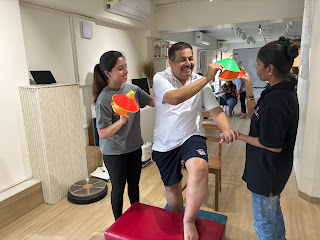
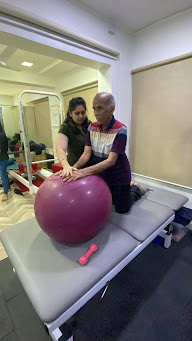
Neuropilates combines Pilates principles with neurological rehabilitation, customizing exercises to address specific cognitive and physical challenges in patients.  For example, with Parkinson’s patients, the focus is on improving coordination, mobility, and awareness. The exercises are designed to enhance both motor skills and cognitive control, empowering patients to actively engage in their recovery. It’s not just about strengthening muscles but also about improving brain-body connection, leading to better overall function and quality of life. Neuropilates can improve memory and focus. Here's how: Mind-Body Connection : Neuropilates encourages patients to engage both the body and mind, promoting cognitive awareness during physical exercises. This dual focus can improve attention and concentration. Cognitive Stimulation : Exercises involving coordination, balance, and multi-step movements challenge the brain, enhancing cognitive functions like focus, problem-solving, and memory. ...

How is neurophysiotherapy different from other Physiotherapy of other conditions like back pain, knee pain etc?

Image
Back in the day, general physicians saw all kinds of patients and gave them medicines in amber-colored bottles. We all followed the family tradition of relying on these doctors for various ailments. But as time passed, things started to change. The rise of specialized medical fields led to targeted treatments for different conditions, and healthcare became more focused and specific.   I saw this shift firsthand when I was in my 4th year of Physiotherapy. Our curriculum was designed to provide a broad foundation with four major subjects:  Musculoskeletal Physiotherapy ,  Neurosciences ,  Community Health , and  Cardiovascular Physiotherapy . This setup made sure we were specialized with the techniques and in-depth knowledge needed in each field. By the time I completed my Master’s in  Adult Neuro-Physiotherapy , I had already developed a strong passion for the subject, especially in treating neurological conditions. I became particularly interested in workin...

For how long do I continue exercises After having Parkinson’s?

Image
The duration of physiotherapy for individuals with Parkinson's disease can vary widely based on individual needs and disease progression. Generally, ongoing physiotherapy is recommended to maintain mobility, flexibility, and strength. Research suggests continuing therapy for at least six months after diagnosis, but long-term engagement is often beneficial. Patients may initially attend sessions multiple times a week, gradually transitioning to less frequent visits as they progress. The focus may shift to maintaining gains achieved in therapy and adapting exercises to changing abilities and functional needs.We have a patient who started with 4 sessions a week and finally in the 2nd year came down to twice a week post achieveing functional goals (cooking and moving about on her own with no risk of fall) and now continuing physiotherapy for fitness (Pilates at Miran) and agility training.  Regular reassessment by a physiotherapist is crucial to tailor the program as symptoms evolve. U...

How do we progress using Body weight support?

Image
As an intern, managing a spinal cord injury patient often required three physiotherapists for transfers and standing, which was uncomfortable and slowed progress. The lack of equipment delayed key milestones like unsupported sitting and weight-bearing, impeding the patient's recovery and their ability to experience and adapt to weight on their legs. When I began at Miran, I was committed to implementing body weight support (BWS) for weight-bearing exercises. The impact on patients was profound; the joy they experienced when they stood and felt their legs for the first time was truly unmatched. This breakthrough not only boosts their confidence but also plays a crucial role in their overall recovery. BWS systems significantly improve rehabilitation outcomes by providing a safer environment for patients to practice standing and walking. The support reduces the risk of falls, allowing patients to engage more fully in their exercises without the constant fear of losing balance. For the...

Adapting the new normal post brain stroke

Image
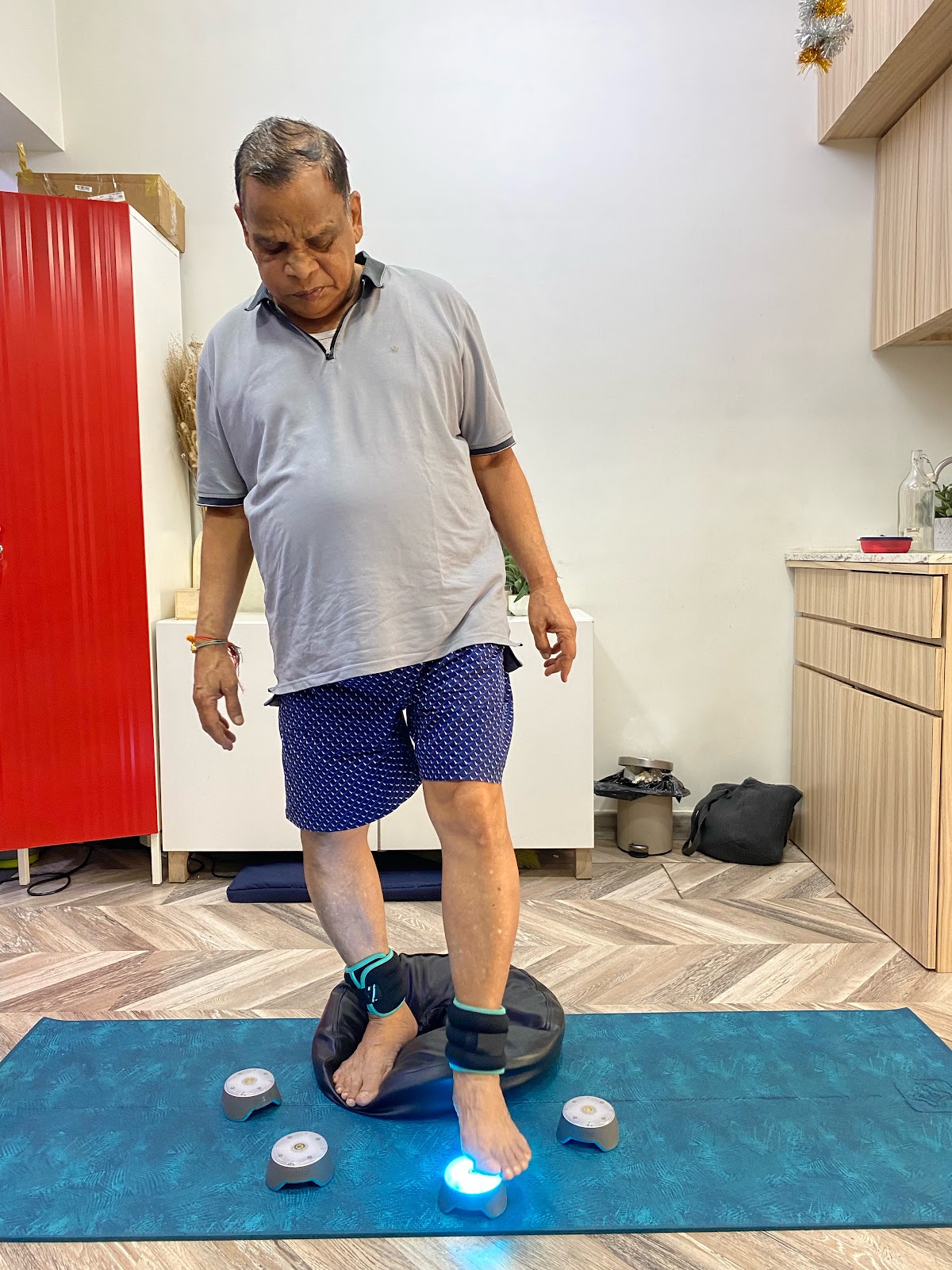
 Accepting the new normal after a brain stroke involves adapting to changes and focusing on rehabilitation and recovery. As a physiotherapist, my role is to guide patients through this transition with a compassionate, individualized approach. First, we assess the extent of physical impairments and functional limitations caused by the stroke. This helps us set realistic goals and develop a personalized therapy plan. Emphasis is placed on improving mobility, strength, and coordination through targeted exercises and activities. We also address any adaptive techniques or assistive devices needed to enhance daily living activities. We focus on adaptive devices like walker or stick as a safety measure more than a supportive device if possible. Encouraging patients to embrace their new routines, while celebrating progress and small victories, is crucial. Support from family and caregivers is integral, as they play a vital role in the recovery process. By focusing on gradual improvement an...

Is loosing balance normal with ageing?

  Have you met anyone saying, I can do a lot of work in the house, I walk for 45 minutes everyday but walking on slippery surface is scary. Now what is this? We fail to admit that we are losing balance while walking on slippery grounds, down the stairs or uneven grounds. We find it normal with ageing. But is it normal? NO, it isn’t normal and lets shed light on why it isn’t.   As you age, a lot of degeneration and system changes happen that are normal. But loosing balance isn’t a normal change. We have three systems in the body that control balance: Vision (major one), somatosensory (your sensory and musculoskeletal system) and vestibular system (the system in between your ears). All of this goes through ageing but if one of the systems is affected more than the normal ageing process, it will affect in increasing the risk of fall. So what are the signs to know that I am at a risk of fall?? When there is fear of fall on a particular surface which was normal at first. Walki...

Can you reverse Parkinson's disease?

Image
I  was at a family gathering, and I was approached by an elder who was about 60 years old and she told me looking at her trembling hand, do you think I have Parkinsons? Its not the first time I have been approached at a party, family function or even a funeral with symptoms and asking for an instant solution or that one exercise that can solve the problem. But this time it was far more shocking, as she thought her hand tremors was Parkinsons. Just to make it clear, Tremors are not equal to Parkinsons. Its best to get diagnosed with a neurologist and have a chart planned out instead of self diagnosis.  But after positive diagnosis, is it the end of the world? No, even if its a progressive movement disorder , we can slower the progress, plateau it and a lot of times reverse the symptoms. But does Parkinsons go away? A very common question asked to us, when we tell them we need minimum 3 months with them to get them functionally better. Parkinsons is like Diabetes or any other...

Can a patient with Parkinsons drive?

Image
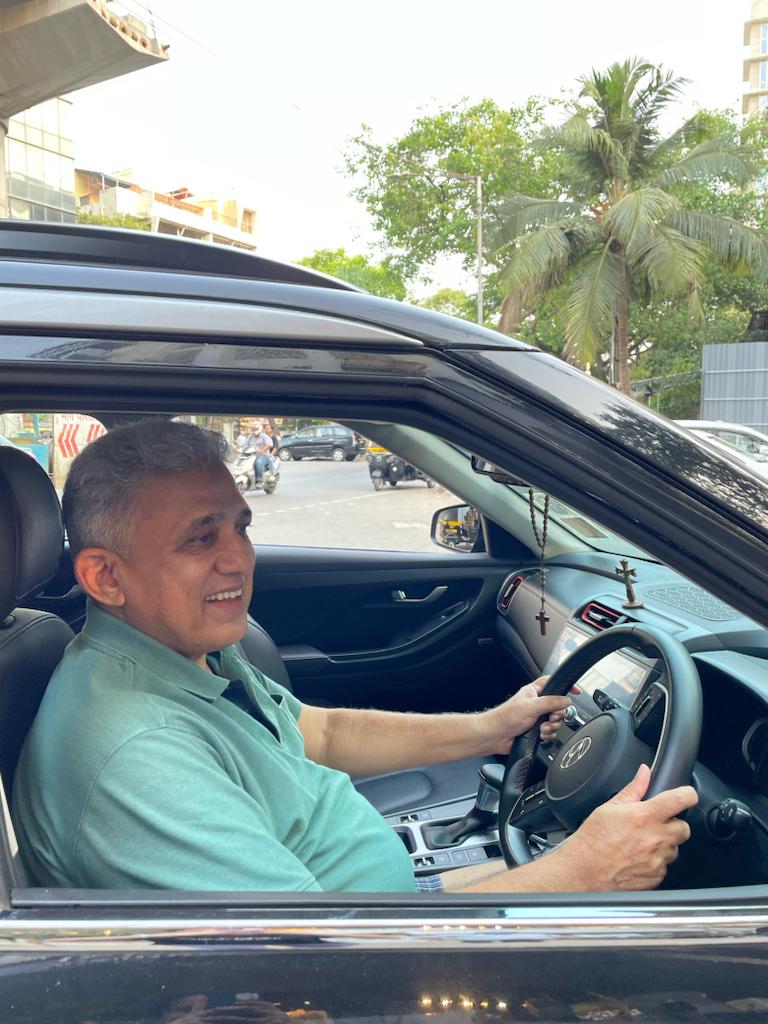
  Have you ever witnessed some one wearing handcuffs walk towards you? Have you noticed their distress ? Have you taken a moment to think how we simply take the ability to move for granted? Thats what i see as a Neuro Physiotherapist when a patient with Parkinsons walks towards me . I see invisible handcuffs around their hands and their feet , which makes it impossible for them to move . The weight of which pull them into a stooped or slouched posture . Their anxiety and depression experienced is almost tangible. How challenging simply turning in bed can be. How all of these factors simply paralyse the patient and bring their morale down to point they feel absolutely helpless. Although being a physiotherapist i do see a silver lining since we do have a key to those handcuffs " MOVEMENT"  simple rhythmic large movements and i almost see the handcuffs click open. Neuro-pilates acting as a catalyst, helping them not only to move better but also carry out their basic daily tasks ...

NeuroHeroes: Redefining ability

Image
We have been trained to believe that if one is affected with a neurological disorder, it’s the complete end of the world and they have to resort to living with the disability that it brings along, as if it’s one of the many irreversible changes of life. I have met numerous patients with such conditions, all having different perspectives on their conditions which has a direct effect on the outcome of therapy.  ‘ Am I going to be normal, again?’  ‘Will I be how I was before I got this disease?’ ‘ Will I ever be able to play my favourite sport?’ ‘Am I always going to be dependent for my day to day activities?’ These are the most common questions asked by patients when they first learn about their condition. The answer to all these questions is a very straightforward yes. They will be independent, but with a mindset shift in what is considered normal. A new normal is established and it comes with different abilities. A patient with an Incomplete Spinal cord injury used to ...

MIRAN- Moving with a goal

I have been a neurophysiotherapist since more than 13 years, and I have seen a lot of changes and improvement in the way we see patients with neurological conditions and their life. After my bachelors, I started working in a reputed hospital, I saw patients with stroke, Parkinsons and other neurological conditions being treated the same way as patients with knee pain, back pain and ankle injuries. The focus was achieving the range of motion, getting them pain free or getting the tone normalised. At that moment I questioned myself , is our body made only for being pain free and moving freely? I didn’t get any answer at that time until I completed my masters. The treatment protocol wasn’t wrong, but according to me it wasn’t fulfilling or achieving the goal fully.  I went for my masters in 2012, and had a great exposure to research, clinical applications and patient centred care. It changed my perspective to physiotherapy and its application. When I came back in 2013, there was no Ne...

Why I chose Neuro physiotherapy?

  Why I chose Neuro physiotherapy? I was 12years old when my grandmother suffered right sided paralysis sitting in the hospital with support and the soup started dripping from her left side while I was feeding her and the doctor walked in saying ‘ She is discharged, now everything is on the physiotherapist to make her walk’. That was the very first time I heard the word “physiotherapist” and had no idea what it meant. It was 2001 and it took us 5 days of searching, asking, going through the yellow pages to find a physiotherapist.  We started physiotherapy for her, at home first and it was tough to imagine he came without any equipments and just treated her with his hands. My grandmother was a very independent lady so it was very difficult for her to ask help for basic tasks like sitting to standing or even going to the washroom. The rehabilitation went on for 6 months and finally at the end of 6 months she was able to walk a whole circle of Shivaji park which is 1.2 km in ...