Posts

Showing posts with the label falls

Living with ataxia: 5 tips for patients and caregivers

Image
  1️⃣ Create a Safe Environment Falls are the biggest risk with ataxia. Make your space safe: Remove loose rugs, wires & clutter. Install grab bars in bathrooms & hallways. Use sturdy, non-slip footwear (even at home). Keep rooms well-lit & furniture stable. Use a walker or cane if needed — safety first! 2️⃣ Prioritize Physiotherapy, Pilates & Speech Therapy Regular physiotherapy helps maintain strength & balance. Modified Pilates (under expert guidance) builds core stability & body awareness. If speech is affected, speech therapy improves communication & confidence. 3️⃣ Use Assistive Devices (Without Hesitation) Walkers, canes, braces — use what works for you . Use apps or tools if speech/writing is difficult. Assistive devices = independence tools , not a step back. 4️⃣ Take Mental Health Support Seriously Living with ataxia is emotionally challenging. It’s okay to feel overwhelmed. Talk to a counselor or join a support group. Caregivers — you need sup...

Why Fall prevention matters: Understanding the risks and Impact of falls.

Image
Roma’s Journey to Confidence: A Story of Strength Roma had always found joy in the simple things—her morning walks, the aroma of spices in her kitchen, and the peaceful prayers at the temple. But after her hip replacement, a sudden fall had shaken her confidence. The fear of falling again kept her from stepping outside, making her feel trapped in her own home. She was got to us by her daughter We started working on her balance and gait.   One day, we gently reassured her, “Roma, confidence comes with practice. Let’s start small.” We worked on balance exercises, strengthening her legs and improving her posture. With time, she learned how to walk with stability, using the right techniques to prevent falls. Her daughter encouraged her to cook again, arranging a sturdy chair by the counter so she could prepare meals safely. Slowly, Roma’s spirit lifted. She ventured out for short walks, first with support, then on her own. The day she finally stepped into the temple after months, she f...

How to show patients their progress?

Image
  1. The Need for Measurable Progress When you started as a Neuro rehab specialist, you realized that patients needed more than just a "feeling" of improvement. They needed numbers and data to really see their progress. Makes sense, right? 2. Enter the Ohm3000 You found the Ohm3000 , which measures two important things: Weight-bearing distribution: Is the weight balanced equally between both feet? Is it more in the front or back? Stability while standing: How steady are they? This helps assess their fall risk . 3. Why It’s Great for Rehab Objective Assessment : It gives clear, measurable results that can show progress over time. Therapeutic Tools : It doesn’t just measure; it helps patients improve with games focused on weight-bearing and balance. This makes therapy more fun and engaging. 4. Patient Motivation Seeing their own progress on the screen must boost their confidence! When patients see real-time feedback, they can feel more in control and motivated to keep impr...

Can Neuro Pilates Boost Memory and Focus: The Cognitive Benefits of Pilates.

Image
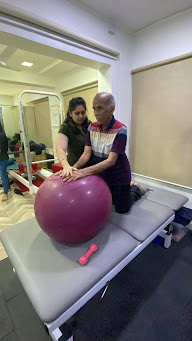
Neuropilates combines Pilates principles with neurological rehabilitation, customizing exercises to address specific cognitive and physical challenges in patients.  For example, with Parkinson’s patients, the focus is on improving coordination, mobility, and awareness. The exercises are designed to enhance both motor skills and cognitive control, empowering patients to actively engage in their recovery. It’s not just about strengthening muscles but also about improving brain-body connection, leading to better overall function and quality of life. Neuropilates can improve memory and focus. Here's how: Mind-Body Connection : Neuropilates encourages patients to engage both the body and mind, promoting cognitive awareness during physical exercises. This dual focus can improve attention and concentration. Cognitive Stimulation : Exercises involving coordination, balance, and multi-step movements challenge the brain, enhancing cognitive functions like focus, problem-solving, and memory. ...

5 ways to take care of your feet if you have diabetes

Image
 Taking care of your feet is especially important if you have diabetes, as the condition can lead to complications such as nerve damage (neuropathy) and poor circulation, increasing the risk of foot infections or ulcers. Here are 5 essential ways to care for your feet and reduce the risk of serious issues: 1. Inspect Your Feet Daily Why: Diabetes can cause nerve damage (neuropathy), which may reduce your ability to feel pain or notice injuries, infections, or other foot problems. What to Do:     Check your feet every day for cuts, blisters, redness, or swelling.                                         Look between your toes and on the soles of your feet for any signs of injury or infection.     Use a mirror if you can’t reach all parts of your feet. If you notice anything unusual, contact your doctor mmediately to prevent complications. 2. Keep Your Feet Clea...

Is loosing balance normal with ageing?

  Have you met anyone saying, I can do a lot of work in the house, I walk for 45 minutes everyday but walking on slippery surface is scary. Now what is this? We fail to admit that we are losing balance while walking on slippery grounds, down the stairs or uneven grounds. We find it normal with ageing. But is it normal? NO, it isn’t normal and lets shed light on why it isn’t.   As you age, a lot of degeneration and system changes happen that are normal. But loosing balance isn’t a normal change. We have three systems in the body that control balance: Vision (major one), somatosensory (your sensory and musculoskeletal system) and vestibular system (the system in between your ears). All of this goes through ageing but if one of the systems is affected more than the normal ageing process, it will affect in increasing the risk of fall. So what are the signs to know that I am at a risk of fall?? When there is fear of fall on a particular surface which was normal at first. Walki...

Can you reverse Parkinson's disease?

Image
I  was at a family gathering, and I was approached by an elder who was about 60 years old and she told me looking at her trembling hand, do you think I have Parkinsons? Its not the first time I have been approached at a party, family function or even a funeral with symptoms and asking for an instant solution or that one exercise that can solve the problem. But this time it was far more shocking, as she thought her hand tremors was Parkinsons. Just to make it clear, Tremors are not equal to Parkinsons. Its best to get diagnosed with a neurologist and have a chart planned out instead of self diagnosis.  But after positive diagnosis, is it the end of the world? No, even if its a progressive movement disorder , we can slower the progress, plateau it and a lot of times reverse the symptoms. But does Parkinsons go away? A very common question asked to us, when we tell them we need minimum 3 months with them to get them functionally better. Parkinsons is like Diabetes or any other...

Can a patient with Parkinsons drive?

Image
  Have you ever witnessed some one wearing handcuffs walk towards you? Have you noticed their distress ? Have you taken a moment to think how we simply take the ability to move for granted? Thats what i see as a Neuro Physiotherapist when a patient with Parkinsons walks towards me . I see invisible handcuffs around their hands and their feet , which makes it impossible for them to move . The weight of which pull them into a stooped or slouched posture . Their anxiety and depression experienced is almost tangible. How challenging simply turning in bed can be. How all of these factors simply paralyse the patient and bring their morale down to point they feel absolutely helpless. Although being a physiotherapist i do see a silver lining since we do have a key to those handcuffs " MOVEMENT"  simple rhythmic large movements and i almost see the handcuffs click open. Neuro-pilates acting as a catalyst, helping them not only to move better but also carry out their basic daily tasks ...